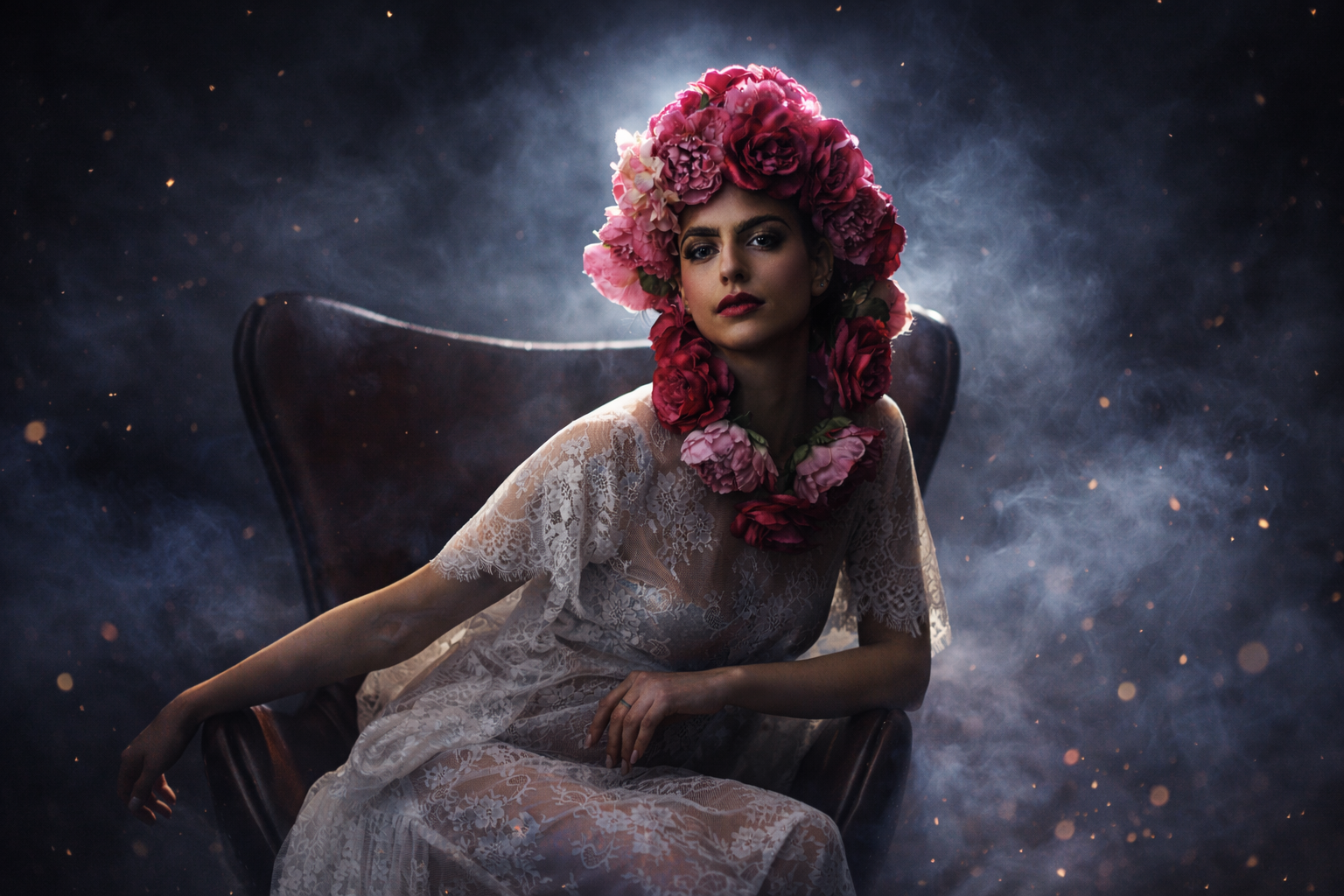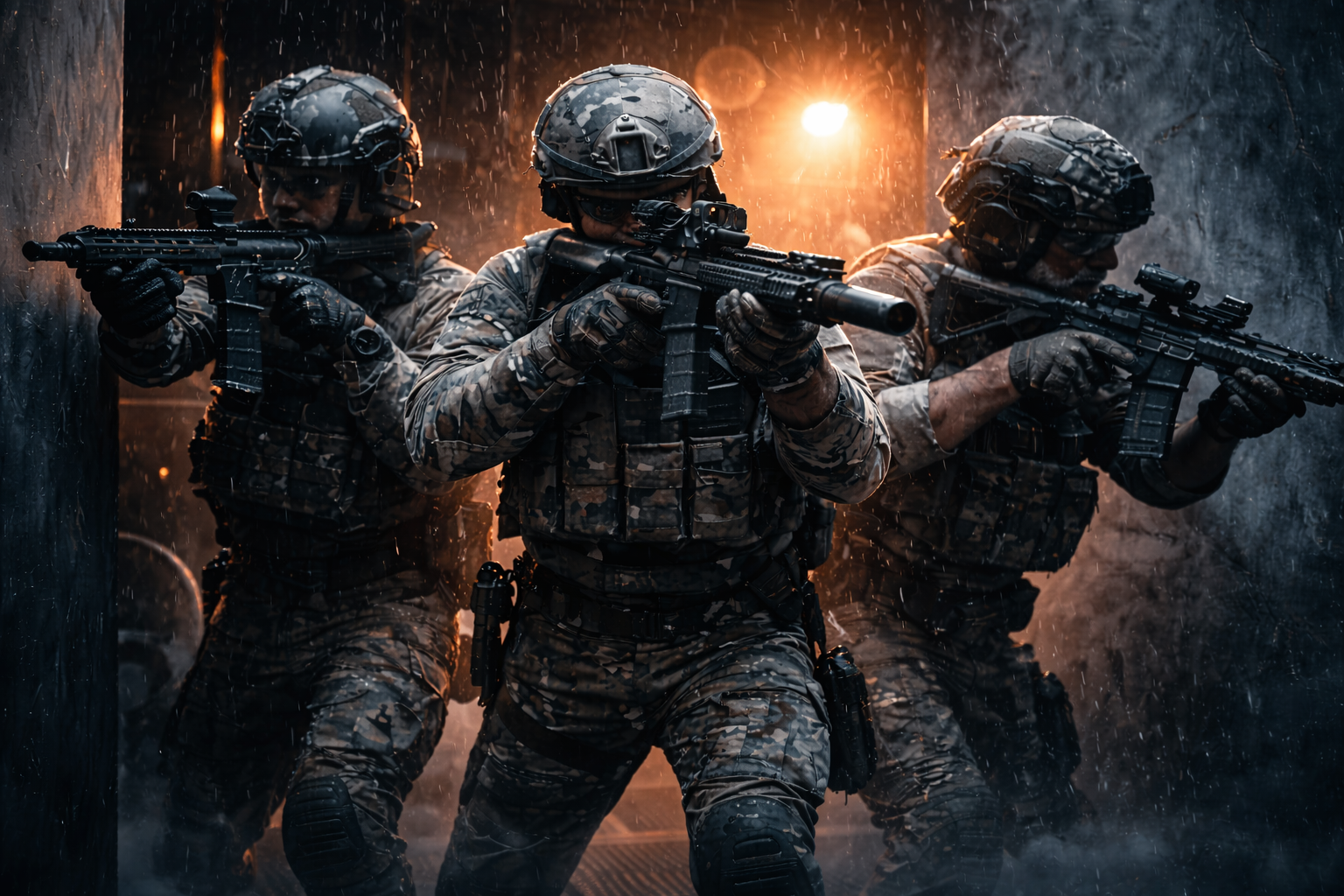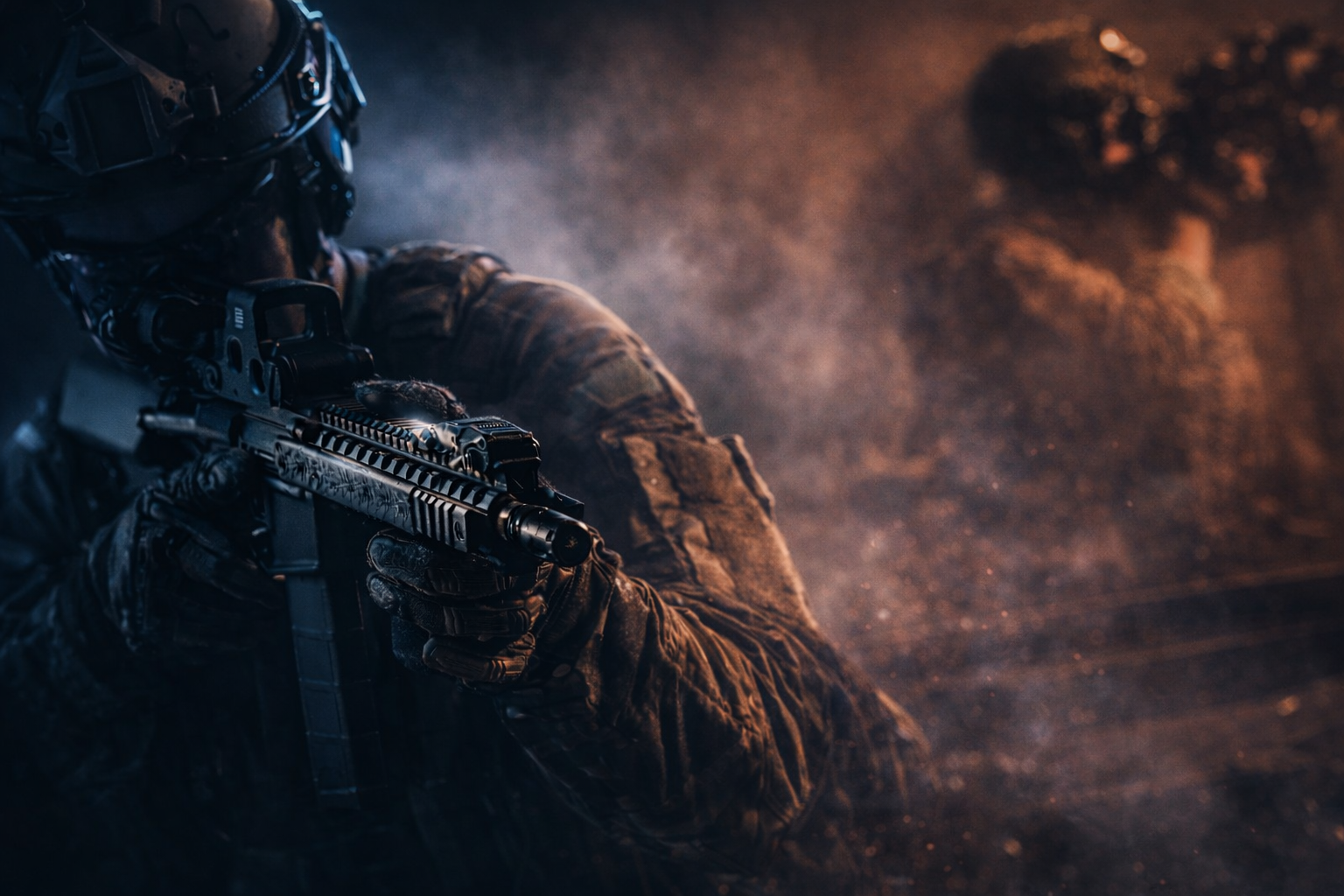
A catalogue shows a product. An editorial shows the world in which that product exists. This is not merely a difference in aesthetics. It is a difference in intent, in the construction of the image, and in what the viewer takes away. A catalogue states what a garment costs and how it looks. An editorial states who you are when you wear it.
An Editorial Does Not Sell a Piece of Fabric — It Sells a World
The strongest fashion editorials say nothing about cut, material or price. They speak of character. Of presence. Of a particular way of existing in space. The viewer will not remember the specific trousers — they will remember the weight of the frame, the way light fell across a face, or the silence in the space behind the figure. This is the output of an editorial. Not the documentation of a product, but the architecture of influence.
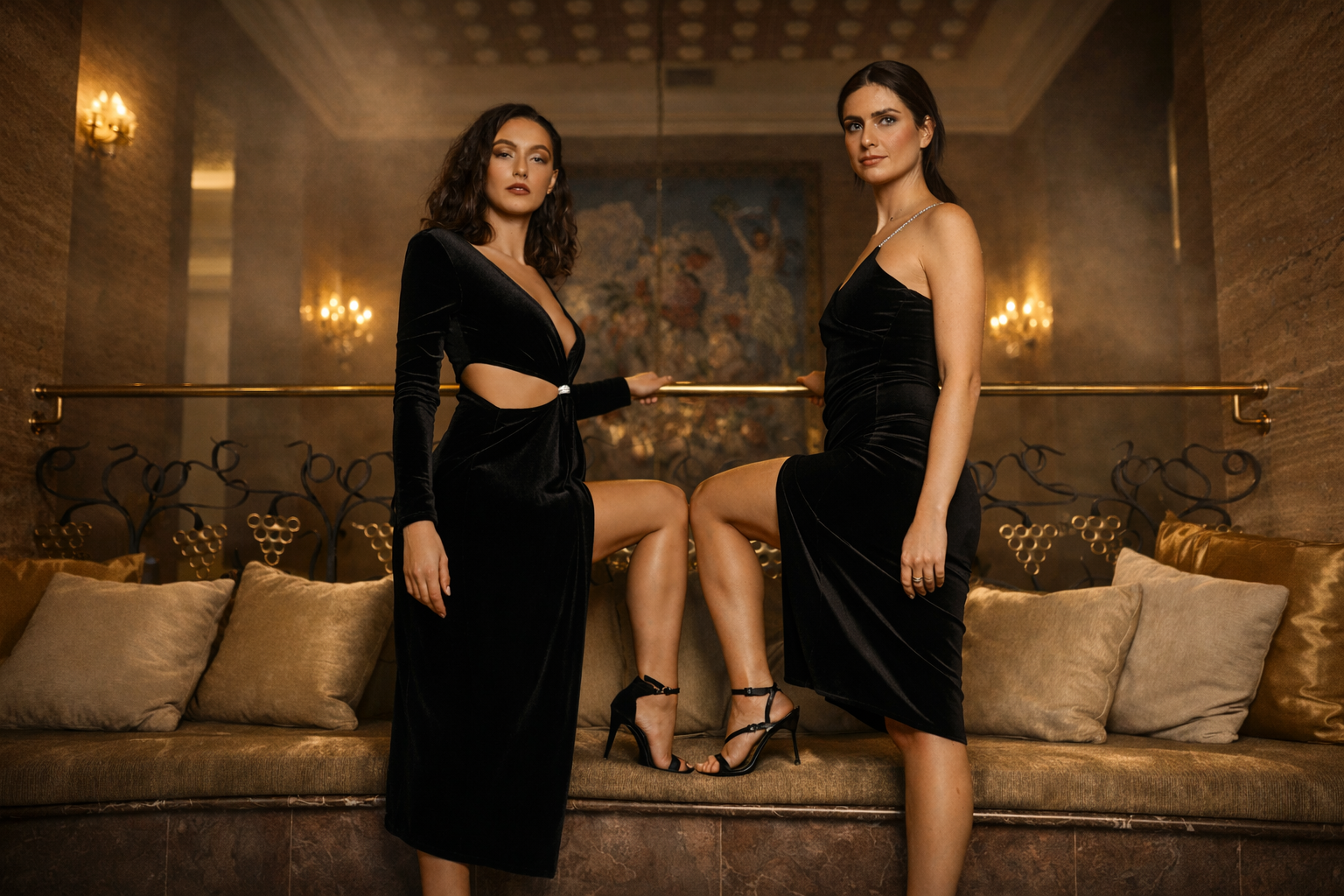
This demands a different mode of thinking than catalogue photography. A catalogue solves a logistical task — the product must be visible, well lit, correctly coloured, consistent. An editorial constructs an atmosphere in which the product acquires a different dimension. These two things cannot be done simultaneously. They are distinct disciplines with distinct outputs.
Atmosphere as Primary Output
Atmosphere is not accidental. It does not emerge simply because talent, a stylist and a camera converge on set. It is produced through control — of light, space, movement, expression and their relationship to each other. If these elements are not defined in advance, the result is a series of frames that may be technically correct but transmit nothing. The tension the viewer needs in order to believe the image is absent.
Atmosphere is constructed in preproduction. That is where the decision is made whether the image will be quiet or charged. Cold or warm. Distant or intimate. These decisions determine what is lit and how, where the talent stands, how they move and what the camera captures. Without this prior decision, the set improvises — and the result carries that improvisation.
Light Built Around Character
In editorial, light is not built toward the product. It is built around the character. The model is not a hanger. They are a person whose way of being present in space defines the frame. Light must underline this way of being — or it can destroy it. Cold side light makes presence distant and contained. Warm fill opens it. Contrast shapes volume and tension.
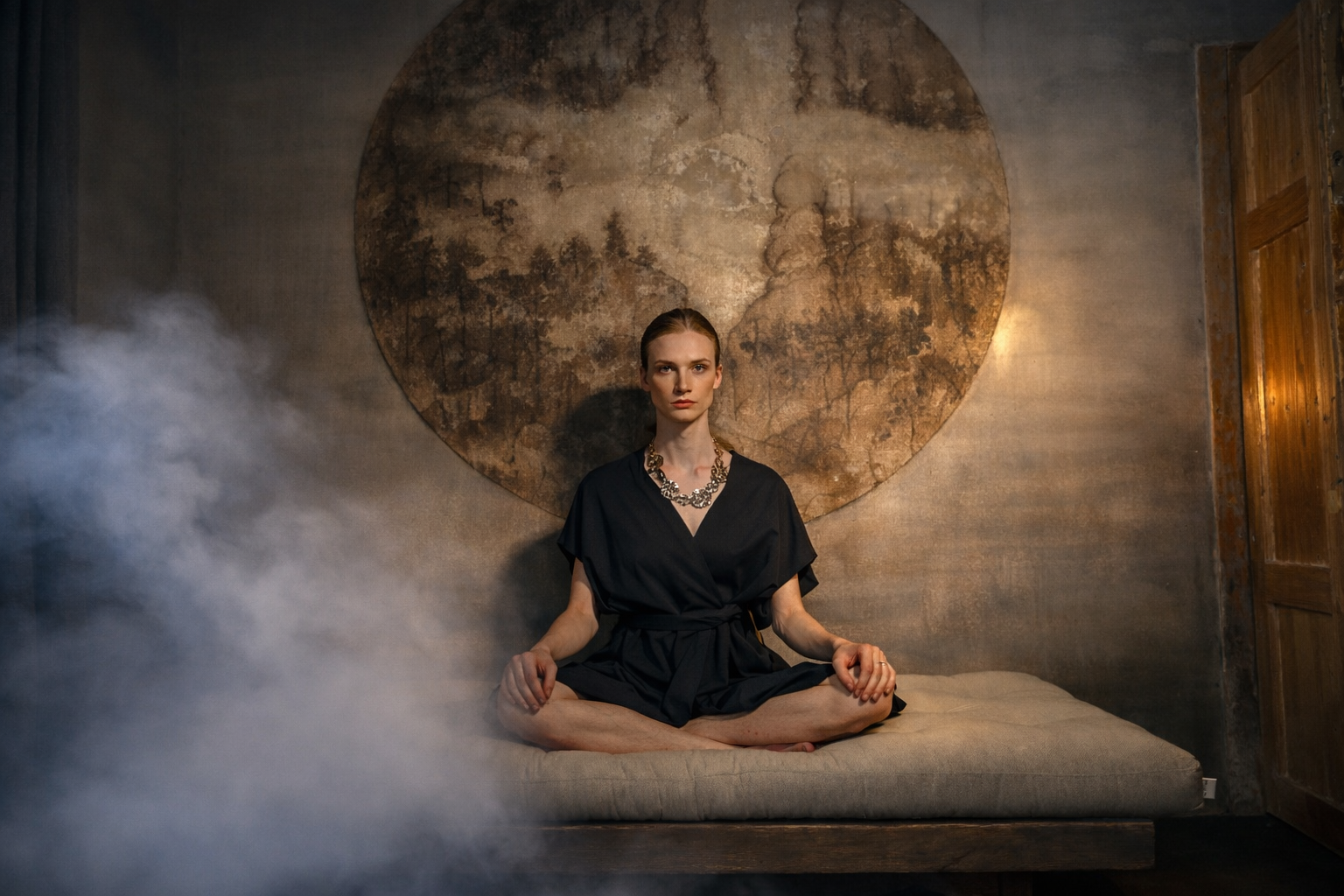
Working with light in editorial therefore does not begin on set. It begins in preproduction, where the specific light situation is tested against specific talent in a specific space. Not in general — concretely. Because the difference between the right and wrong light temperature can be the difference between a strong and an average result.
A Space That Is Not a Backdrop
Space in an editorial is not a background. It is a layer that carries part of the story. An industrial hall, a baroque interior, bare concrete, a natural exterior — each space brings its own context, texture, light conditions and history. These properties enter the image automatically. The question is whether the production works with them consciously or ignores them.
Choosing a space for an editorial is not a logistical decision. It is a visual decision. The space must serve the character, not compete with it. It must amplify the atmosphere, not disperse it. The strongest frames emerge when talent, light and space form a single visual system — not three separate elements sharing a location.
Why a Strong Editorial Is Made Before the Shoot
What happens on set is the realisation of decisions made beforehand. If the team arrives without a defined visual intent, it begins to improvise. Improvisation in fashion production may yield fortunate frames, but it will not yield a consistent result. And consistency is what transforms a series of images into an editorial — rather than a collection of well-exposed photographs.
Editorial preproduction includes: a clear decision about atmosphere and world; selection of talent by character and presence; selection of space by visual intent; collaboration with the stylist on layering the visual language; and definition of the light situation before arriving on location. Only then does the presence of a camera make sense.
A strong editorial does not begin with clothing. It begins with the world in which clothing has a reason to exist.
Nezávazná poptávka — zaslání briefu (produkční řešení do 2 pracovních dnů). Ozvěte se nám →
Freemason.cz
Premium production studio Prague — commercial photography, tactical production, fashion editorial and scenic production. White-label, full rights transfer.