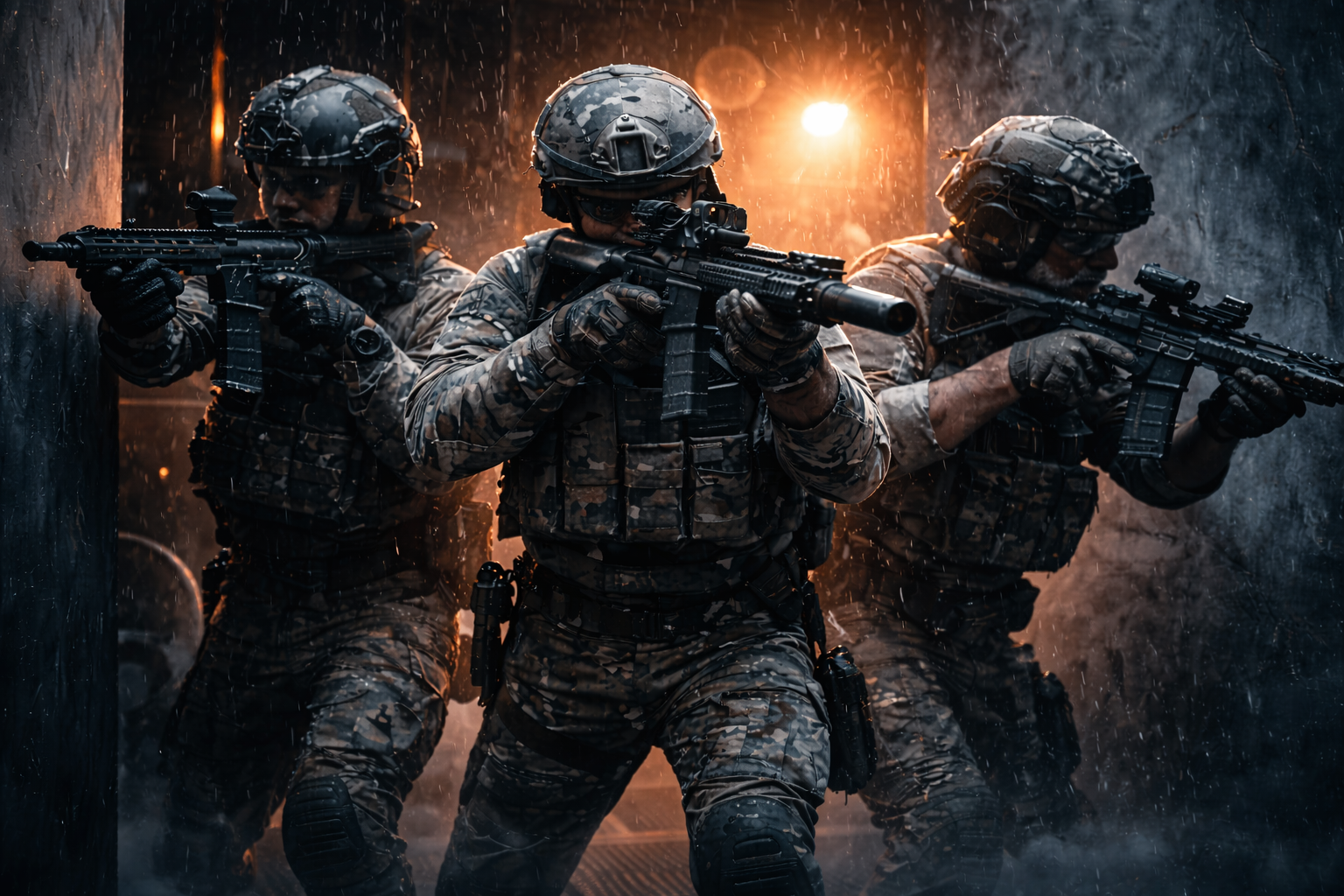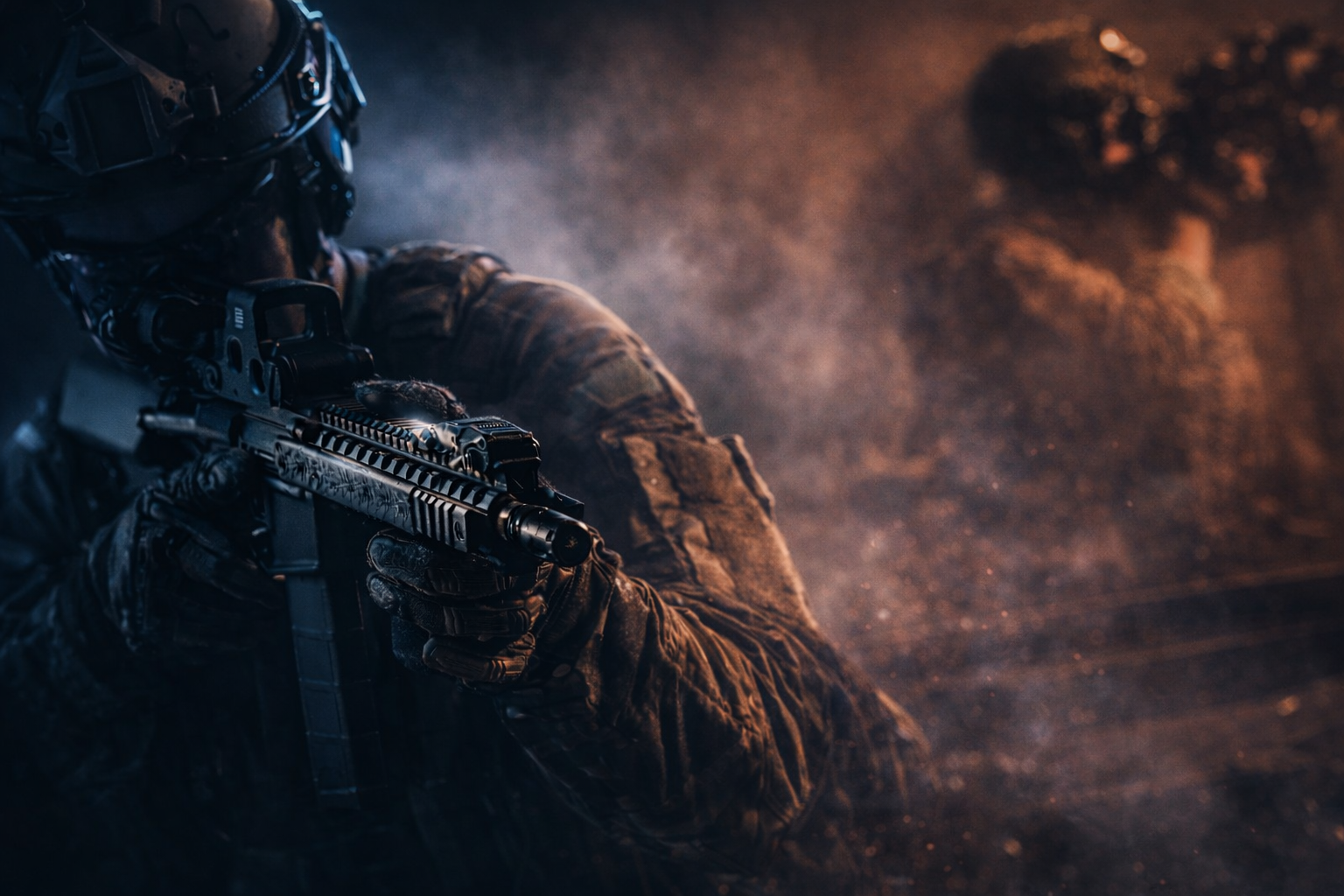
Fire cannot be added to an image after the fact. It is not a filter, a layer, or an effect. A flame is a physical situation that occupies space, changes light, casts shadows, heats the air and affects everyone in its proximity. An image made with live fire carries traces of a real situation. This is precisely what separates it from anything that can be created on a computer.
Fire Is Not an Effect — It Is a Physical Source of the Image
CGI fire has shape but no temperature. It moves but does not react. It is symmetrical in places where real flame never is. An experienced eye — especially the eye of an audience that works with fire or knows it from real environments — immediately recognises the difference. They may not know why. They feel that something in the image is wrong.
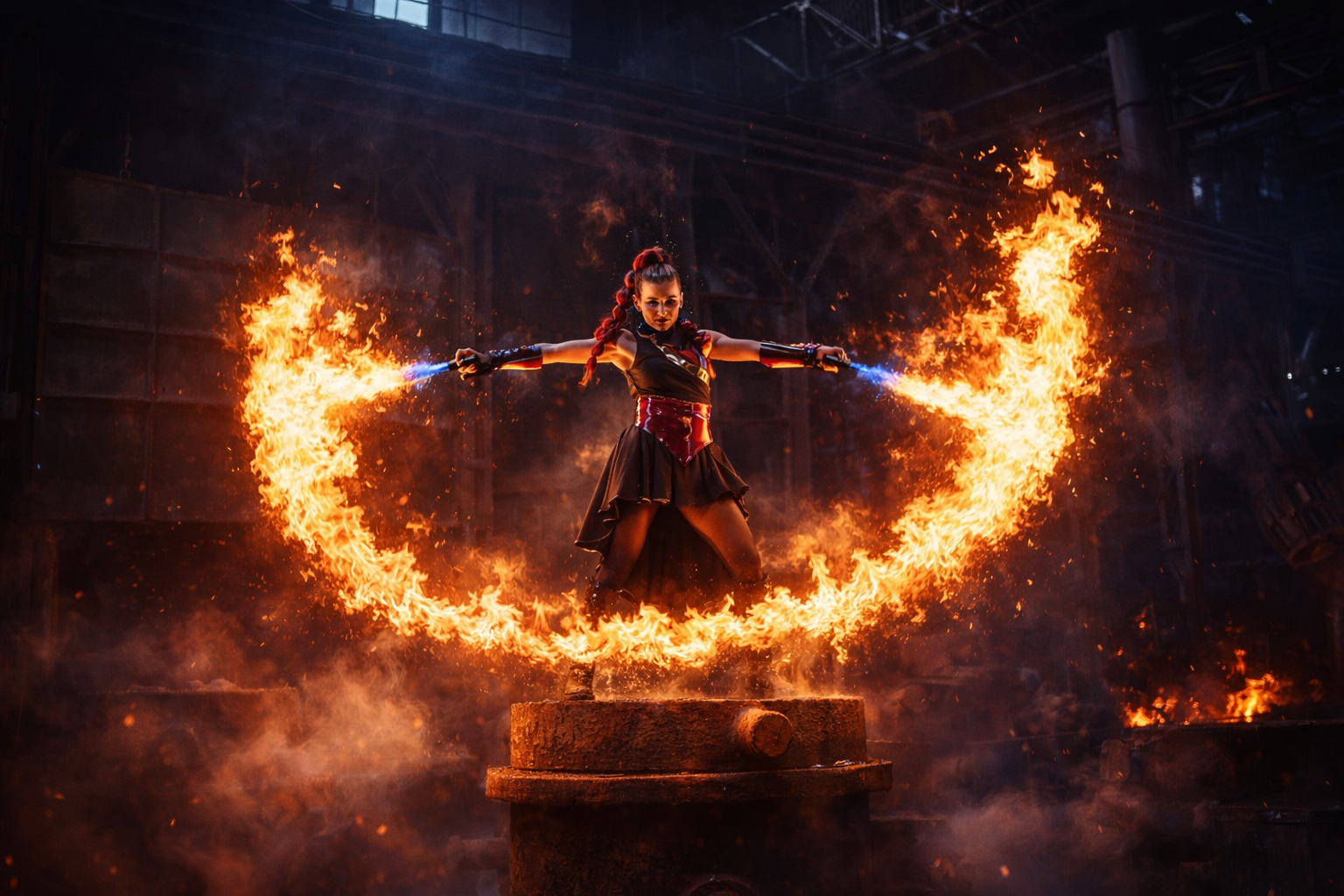
Live flame generates light that changes every second. It casts moving shadows. Its colour shifts with distance, material and conditions. It creates contrast that cannot be simulated — because it is physical, not mathematical. Talent lit by live fire reacts differently than talent lit by a softbox set to orange. There is different tension in the face. Different presence in the movement.
Why Real Flame Cannot Be Replaced in Post-Production
Post-production can refine an image but cannot give it what was never there. Real fire casts specific light traces onto walls, floors, faces and equipment. These traces are connected, consistent and physically correct. Their compositing is extraordinarily costly and the result still carries signs of construction — because it is not the product of a real situation, but an imitation of one.
The difference is not only aesthetic. It is a difference in credibility. An image with live fire has physical warmth, irregularity and the light trace of a real situation. The viewer perceives it as genuine. That is precisely what commercial production needs in certain contexts.
Safety as Part of Scene Construction
Working with fire without precise preparation is not courage. It is incompetence. Every production with live fire requires certified pyrotechnicians, a safety plan, clearly defined zones and experience managing situations in real time. This is not a constraint on creativity. It is the condition that makes the scene controllable at all.
The safety framework defines what is possible, where, at what distance and under which conditions. Within that framework, space for precise production opens up. Without it, nothing is produced — or an accident happens instead. Preproduction with fire therefore includes technical consultations, simulations, permits and a full-team briefing before the first spark.
What Live Fire Does to Space, Talent and Camera
Flame changes space in ways no other light source can fully replicate. The dance of light and shadow is irregular, unpredictable and therefore alive. An industrial space lit by fire looks different from a studio with a thermal gel. A historic interior with torches carries different visual weight than the same space with warm-white LED strips.
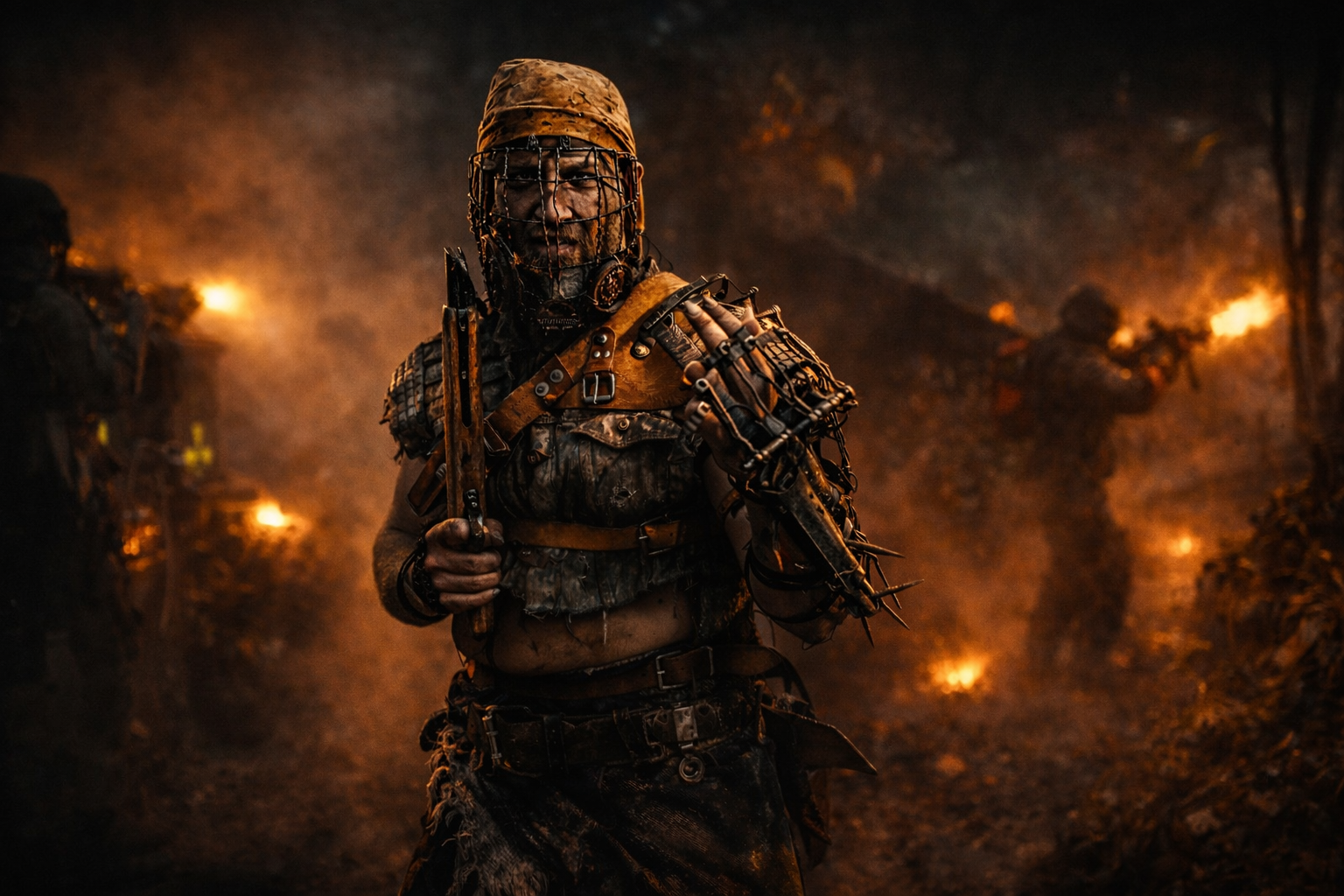
Talent near live fire reacts differently. The heat is physical. The sound of the flame is physical. Instincts engage. Expression changes without instruction. These are situations the camera captures — but it must be present at the right moment, because they do not repeat.
When Scenic Production with Fire Makes Sense
Not every project requires pyrotechnics. Live fire makes sense when it is part of the story or the visual architecture of the scene — when the presence of flame carries meaning. In brand films where physical intensity defines the character of the brand. In editorials where fire creates an atmosphere that cannot be built any other way. In campaigns where the authenticity of the situation gives the visual weight that no effect can match.
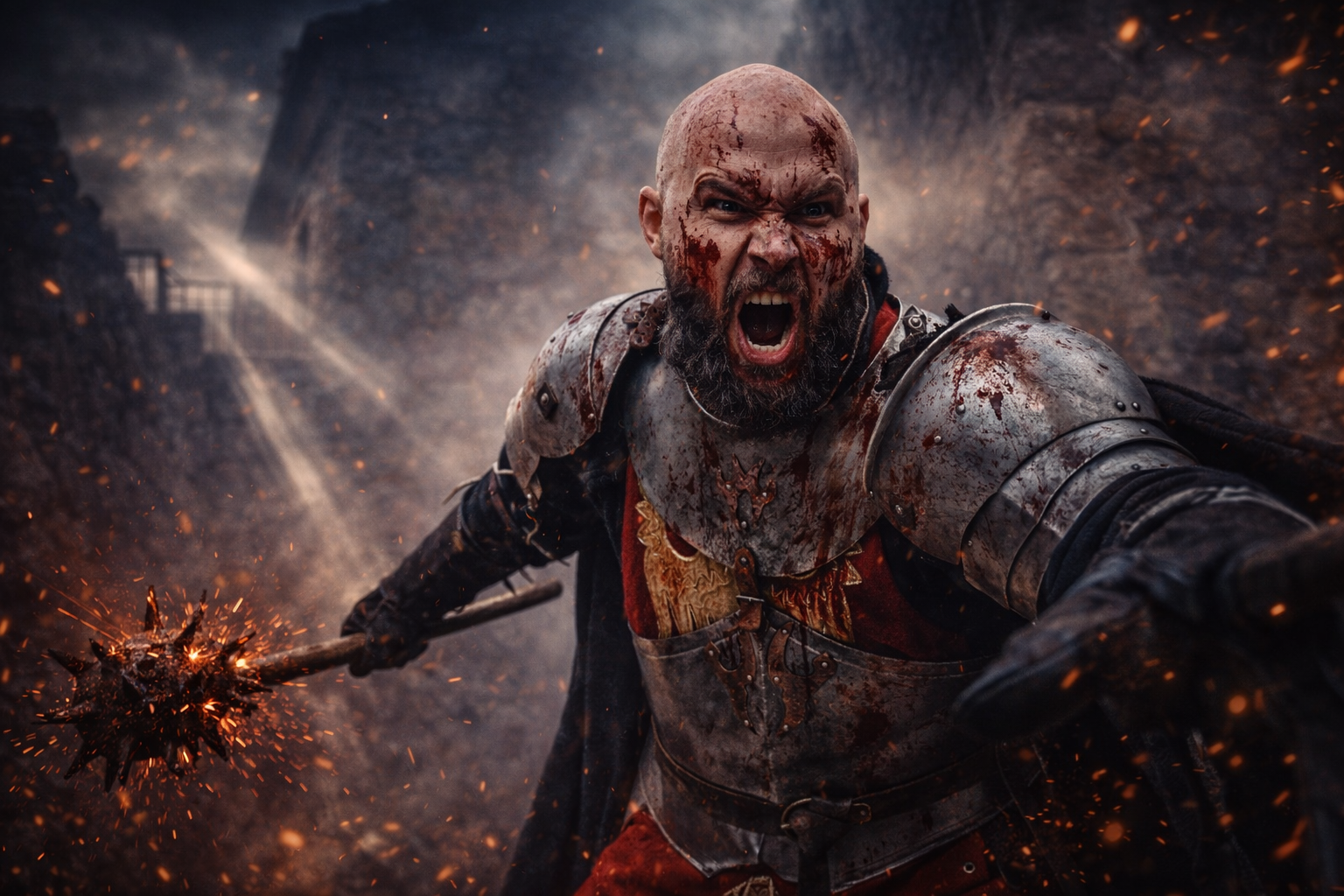
Live fire cannot be added to an image after the fact. It was either part of the scene, or it is absent from the image.
Freemason.cz
Premium production studio Prague — commercial photography, tactical production, fashion editorial and scenic production. White-label, full rights transfer.